
European Car Maintenance in Iowa — What Owners Need to Know
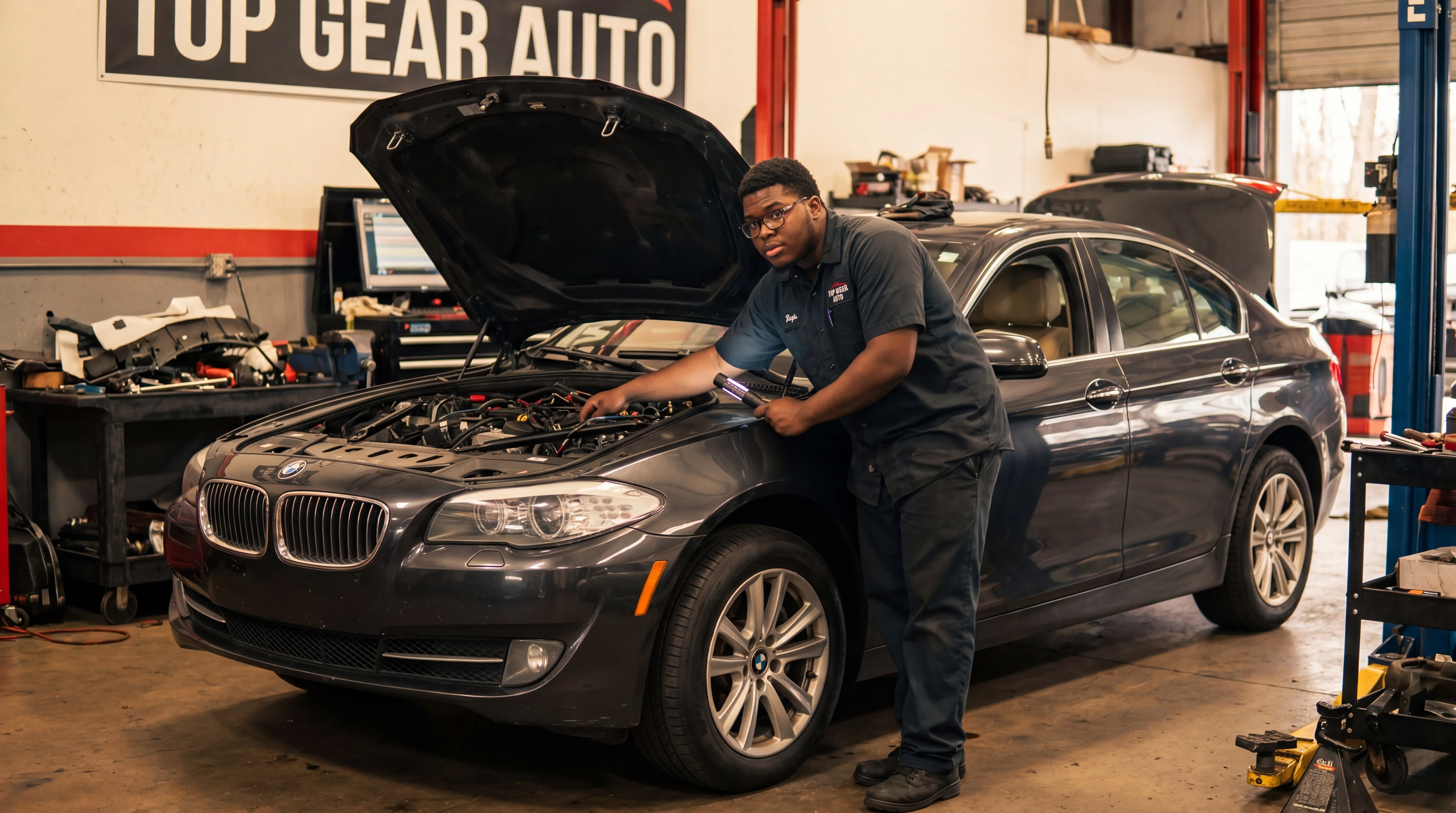
European car maintenance refers to the specialized service and repair procedures required by vehicles from manufacturers like BMW, Audi, Volkswagen, Mercedes-Benz, Porsche, and Volvo. These vehicles are engineered differently than their American and Japanese counterparts, and they demand a different approach to maintenance — especially in a climate like Iowa’s, where temperature extremes, road salt, and humidity create conditions that European engineers did not always design for.
Key Takeaways
- European cars typically cost 30–50% more to maintain than comparable American or Japanese vehicles
- Iowa’s road salt, freeze-thaw cycles, and humidity accelerate wear on European cooling systems, electronics, and undercarriages
- Common failure points include cooling systems, electrical components, and oil leaks from aged gaskets
- Not every shop has the diagnostic tools or training to work on European vehicles correctly
- Top Gear Auto services both European and American engines, from oil changes to full rebuilds
Why European Cars Need Specialists
European vehicles are precision machines. That precision delivers excellent performance, refined handling, and solid build quality — but it also means tighter tolerances, more complex systems, and parts that cost more to manufacture and replace.
Here is what makes European maintenance different:
Diagnostic systems: BMW uses ISTA, Audi and VW use VCDS/ODIS, and Mercedes uses XENTRY. These are proprietary diagnostic platforms that go far beyond the generic OBD-II scanners most shops use. Without the correct diagnostic tool, a mechanic may read a generic fault code without understanding the manufacturer-specific context behind it.
Fasteners and assembly: European engineers frequently use Torx, triple-square, and specialty fasteners that require tools most general shops do not stock. Attempting repairs with the wrong tools leads to stripped bolts, broken clips, and damaged components.
Parts specifications: European cars often require specific oil viscosities, coolant formulations, brake pad compounds, and transmission fluids that differ from what a parts store stocks on the shelf. Using the wrong specification can cause premature failure and void warranties.
How Iowa’s Climate Affects European Cars
Iowa’s climate creates specific challenges for European vehicles that owners in mild-weather states do not face:
Road Salt and Undercarriage Corrosion
Iowa DOT applies thousands of tons of road salt each winter. European vehicles — particularly BMW and Audi — use aluminum and magnesium components in the suspension and subframe that corrode differently than steel. The galvanic reaction between dissimilar metals accelerates corrosion in salt-heavy environments.
Check your undercarriage annually. Pay particular attention to control arm bushings, subframe mounting points, and brake line routing.
Cooling System Stress
Iowa’s temperature swings — from -10 degrees F in January to 95 degrees F in July — put enormous stress on cooling systems. European cooling systems use plastic expansion tanks, composite water pump impellers, and complex thermostat housings that degrade faster under extreme thermal cycling.
The most common failure we see at Top Gear Auto is the plastic coolant expansion tank on BMW models. These tanks become brittle after 6–8 years of thermal cycling and crack, leading to sudden coolant loss and potential overheating. Replacement costs $200–$400 for parts and labor.
Electrical Component Failures
Moisture from Iowa’s humidity, combined with temperature swings, causes condensation inside electrical connectors and control modules. BMW and Audi are particularly susceptible to:
- Window regulator failures
- Door lock actuator malfunctions
- Adaptive headlight control module issues
- Battery drain from parasitic electrical draws
Common Issues by Brand
BMW (3 Series, 5 Series, X3, X5)
- Oil leaks from valve cover gaskets and oil filter housing gaskets ($400–$800 to repair)
- Coolant system failures — expansion tanks, water pumps, and thermostats ($300–$600 per component)
- VANOS system wear — Variable valve timing solenoids and seals degrade over time ($500–$1,200)
Audi / Volkswagen (A4, A6, Jetta, Passat, GTI)
- Timing chain tensioner failure on 2.0T FSI engines — can cause catastrophic engine damage if ignored ($1,500–$3,000 to repair proactively)
- Carbon buildup on intake valves in direct injection engines — causes rough idle and reduced power ($400–$800 for walnut blasting)
- Mechatronic unit failures in DSG transmissions ($1,500–$3,500)
Mercedes-Benz (C-Class, E-Class)
- Balance shaft and idler gear issues on the M272 V6 engine ($2,000–$4,000)
- Air suspension failures on models equipped with Airmatic ($1,500–$3,000 per corner)
- Electrical gremlins in SAM (Signal Acquisition Module) units ($500–$1,200)
Maintenance Schedule: European vs. American
European manufacturers often advertise longer service intervals — BMW’s “Condition Based Service” can suggest oil changes at 10,000–15,000 miles. In Iowa’s conditions, those intervals are too long.
Our recommendation for European vehicles in Iowa:
| Service | Manufacturer Interval | Our Iowa Recommendation |
|---|---|---|
| Oil change | 10,000–15,000 miles | 5,000–7,500 miles |
| Coolant flush | 100,000 miles | 60,000 miles |
| Brake fluid flush | 2 years | 2 years (this one is correct) |
| Transmission fluid | ”Lifetime fill” | 60,000 miles (there is no such thing as lifetime fluid) |
| Spark plugs | 60,000 miles | 45,000–60,000 miles |
The gap between manufacturer recommendations and real-world Iowa conditions is where expensive failures happen. Following our tighter schedule costs a few hundred dollars more over time but prevents thousands in major repairs.
Why Top Gear Auto for European Cars
Top Gear Auto services both American and European vehicles. Our shop has the diagnostic tools, the specialty fasteners, and the hands-on experience to work on BMW, Audi, VW, and Mercedes-Benz alongside the Ford, Chevy, and Toyota models that fill most Iowa driveways.
Whether you need a routine oil change on your GTI, a brake job on your 3 Series, or a full engine rebuild on your Audi’s 2.0T, we handle it in-house with the right tools and correct parts specifications.
We also sell European vehicles on our used car lot. Every European car we sell goes through the same 6-step inspection as our American and Japanese inventory — because the inspection standard should not change based on the badge on the hood.
Keep Your European Car Running in Iowa
European cars are built to perform, but they need owners and mechanics who understand what they require. Iowa’s climate adds stress that European engineers did not fully anticipate, and proactive maintenance is the best way to avoid the repair bills that give these cars their expensive reputation.
Call Top Gear Auto at (319) 853-8861 to schedule service for your European vehicle, or stop by our Iowa City shop. We will give you an honest assessment of what your car needs — no overselling, no guesswork.
Frequently Asked Questions
Why do European cars cost more to maintain than American or Japanese cars?
European cars use tighter engineering tolerances, more complex electronics, and parts that are manufactured to stricter specifications. A brake job on a BMW typically costs 30–50% more than the same job on a Toyota because the pads, rotors, and sensors are all engineered differently. Labor also takes longer because access to components is more difficult.
Can any mechanic work on a BMW or Audi?
Technically yes, but not every mechanic has the diagnostic tools, software, or experience to work on European vehicles correctly. BMW, Audi, and VW use proprietary diagnostic systems, specialized fasteners, and assembly procedures that differ from American and Japanese cars. Taking your European car to a shop without this expertise can lead to misdiagnosis and unnecessary repairs.
Does Top Gear Auto work on European cars?
Yes. Top Gear Auto services both American and European vehicles, including BMW, Audi, Volkswagen, and Mercedes-Benz. We have the diagnostic equipment and hands-on experience to handle everything from routine oil changes to engine rebuilds on European platforms.
Ready to Get Started?
Schedule your free diagnostic today. No obligation, no hidden fees — just honest answers about your vehicle.