
Engine Swap vs. Buying a New Car — When Each Makes Sense
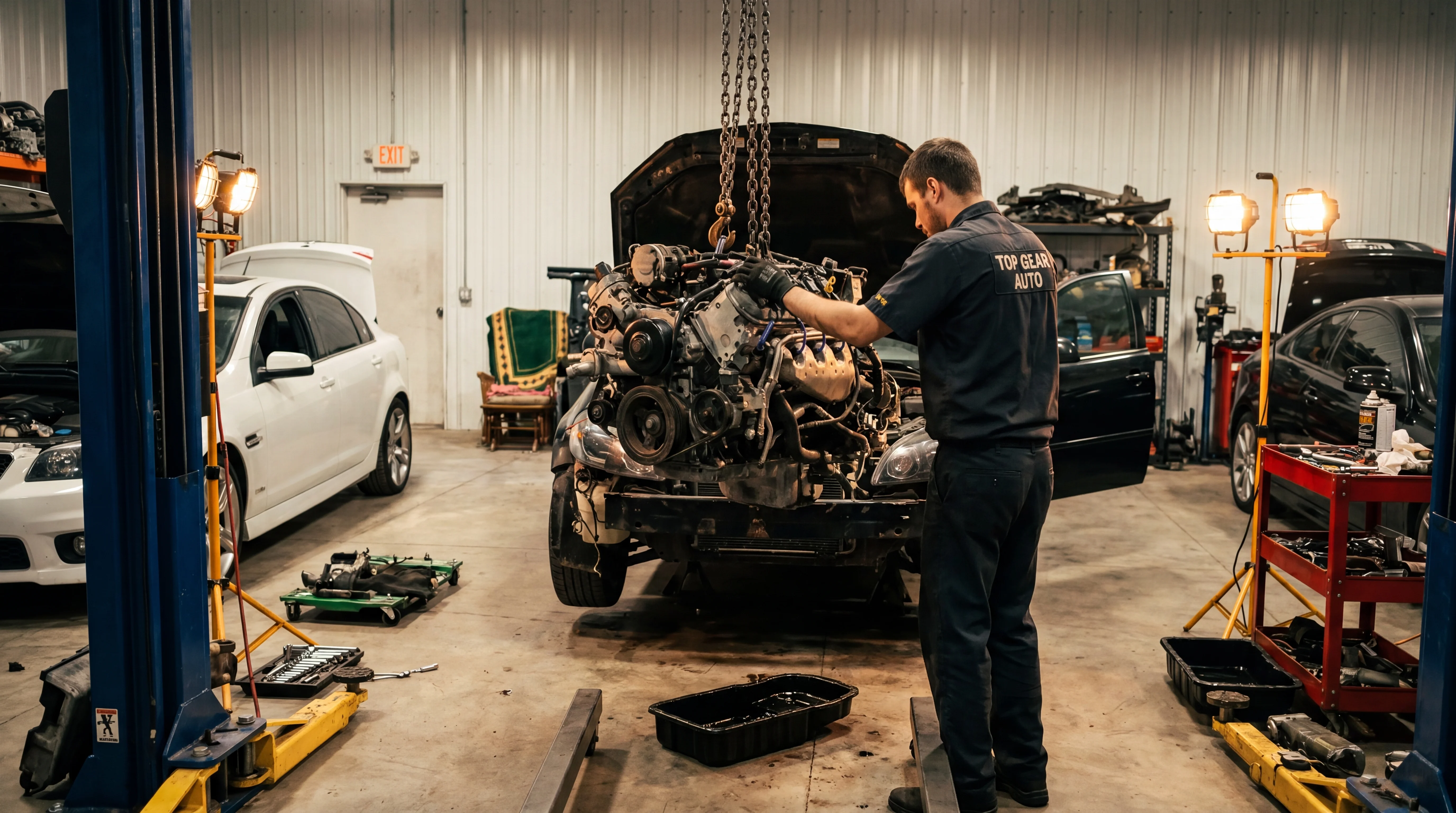
An engine swap is the process of removing a vehicle’s failed or worn-out engine and replacing it with a different working engine. It is a major mechanical procedure, but when done correctly, it can extend a vehicle’s life by 100,000 miles or more at a fraction of what a new car costs. The decision between swapping an engine and buying new comes down to math, vehicle condition, and what you actually need.
Key Takeaways
- Engine swaps cost $2,300 to $8,000 (average $4,000) vs. $25,000 to $48,000+ for a new car
- A swap makes financial sense when the rest of your vehicle — body, transmission, interior — is in good condition
- Buying new makes sense when repairs exceed 50% of the vehicle’s post-repair value or when multiple major systems are failing
- Top Gear Auto handles both American and European engine swaps with 6-month or 3-year warranty options
- Swapping avoids new car payments, higher insurance, and immediate depreciation
The Cost Comparison
Here is the straightforward math:
| Option | Cost Range | Monthly Payment (60-month loan at 7%) |
|---|---|---|
| Engine swap | $2,300–$8,000 | $46–$158 (if financed) |
| Used car replacement | $3,000–$8,900 | $59–$176 (if financed) |
| New car (economy) | $25,000–$35,000 | $495–$693 |
| New car (average) | $48,000+ | $950+ |
An engine swap at $4,000 costs roughly what two months of payments on an average new car would be. When your vehicle is otherwise in good shape, the swap is the clear financial winner.
But cost alone does not tell the full story. Let us look at when each option truly makes sense.
When an Engine Swap Makes Sense
Your Vehicle Is Otherwise Solid
The best candidate for an engine swap is a vehicle where the engine is the only major problem. If the transmission shifts smoothly, the body is straight and rust-free, the interior is in decent shape, and the suspension is tight, you are looking at a vehicle that just needs a new heart.
We see this regularly at Top Gear Auto. A customer brings in a 2012 Ford F-150 with a seized engine but everything else in good condition. The truck is worth $12,000 running. An engine swap at $4,500 turns a dead truck into a vehicle with another 100,000 miles ahead of it.
You Want to Avoid Car Payments
A new car at $48,000 financed over 60 months costs nearly $1,000 per month before insurance and registration. An engine swap at $4,000 — even financed — costs a fraction of that. For buyers who are debt-averse or budget-conscious, the swap eliminates years of monthly payments.
You Like Your Current Vehicle
Sometimes the math is secondary. If you have a vehicle you enjoy driving — whether it is a truck that fits your lifestyle, a sedan you have maintained for years, or a car with sentimental value — a swap lets you keep it on the road without starting over.
Insurance Stays Low
New cars cost more to insure because they have higher replacement values. Keeping your current vehicle with a swapped engine means your insurance stays at the same rate. For drivers under 25 or those with imperfect driving records, this difference can be $100+ per month.
When Buying a New Car Makes Sense
Multiple Major Systems Are Failing
If your engine is dead, the transmission is slipping, the frame has structural rust, and the electrical system has gremlins, you are looking at $8,000 to $15,000+ in combined repairs. At that point, buying a different vehicle makes more sense than rebuilding one system at a time.
Repair Cost Exceeds 50% of Post-Repair Value
This is the general rule: if the total repair cost exceeds half of what the vehicle would be worth after the repair, the repair is not a good investment. A $5,000 engine swap on a vehicle worth $6,000 after the swap is borderline. A $5,000 swap on a vehicle worth $15,000 after is a clear win.
You Need Modern Safety Features
Older vehicles lack features like automatic emergency braking, lane departure warning, blind spot monitoring, and modern crash structures. If safety is a top priority — especially for new drivers or families — a newer vehicle offers meaningful protection improvements.
Your Vehicle Has High-Mileage Wear Everywhere
Even with a fresh engine, a vehicle with 250,000 miles on the chassis, suspension, steering, and cooling system will need ongoing maintenance. At some point, replacing individual systems becomes less practical than replacing the entire vehicle.
What an Engine Swap Involves
At Top Gear Auto, an engine swap follows this process:
- Diagnosis — We confirm the original engine has failed and assess the rest of the vehicle
- Engine sourcing — We find a compatible replacement engine with verified mileage and history
- Removal — The failed engine comes out along with the exhaust manifold, wiring, and accessories
- Preparation — The replacement engine gets new gaskets, seals, fluids, and any necessary accessories from the original engine
- Installation — The replacement engine is installed, connected to the transmission, wiring, and cooling system
- Testing — We run the vehicle through a complete test cycle to verify performance
The entire process typically takes 1 to 3 weeks depending on parts availability. Visit our engine swap service page for details on what is included.
The Warranty Factor
One concern with engine swaps is longevity. At Top Gear Auto, we address that directly with two warranty options:
- 6-month parts-only warranty — Covers the replacement engine parts if they fail
- 3-year parts-and-labor warranty — Full coverage on the swap for 3 years, including all labor
The 3-year warranty gives you confidence that your swap is a long-term solution, not just a short-term fix.
Making the Decision
Ask yourself these four questions:
- Is the engine the only major problem with my vehicle?
- Would the vehicle be worth significantly more than the swap cost once it is running again?
- Am I willing to commit to regular maintenance (oil changes, brakes) to protect the investment?
- Do I want to avoid monthly car payments?
If you answered yes to at least three of those, an engine swap is likely the better choice.
Get a Straight Answer
We will tell you honestly whether your vehicle is a good candidate for a swap or whether your money is better spent on a replacement. No pressure, no upselling.
Call Top Gear Auto at (319) 853-8861 or stop by our Iowa City shop. We will inspect your vehicle, give you a realistic estimate, and help you make the decision that makes the most sense for your situation.
Frequently Asked Questions
How much does an engine swap cost compared to buying a new car?
An engine swap at Top Gear Auto costs between $2,300 and $8,000, with an average around $4,000. A new car in 2026 averages over $48,000 nationally. Even a modest new car purchase starts around $25,000–$30,000 before taxes and fees.
How long does an engine swap last?
A properly performed engine swap using a quality replacement engine can last 100,000 to 200,000+ miles. The lifespan depends on the replacement engine's condition, the quality of installation, and how well the vehicle is maintained afterward.
Can you swap any engine into any car?
Not always. The replacement engine needs to be compatible with the vehicle's transmission, wiring, computer systems, and engine mounts. At Top Gear Auto, we match engines to vehicles carefully and handle all the mechanical and electrical integration.
Ready to Get Started?
Schedule your free diagnostic today. No obligation, no hidden fees — just honest answers about your vehicle.